Work and social change
The town of 1,800 looms
Key dates
- 1790s
About a hundred looms work in Girvan.
- 1838
An inquiry counts 1,800 looms in the town and its vicinity.
- 1860
Weavers begin saving towards a co-operative shop.
- 1861
The co-operative takes premises and begins trading.
Show all 8 dates Show fewer dates
- 1863
Relief supports weaving families with food and stone-breaking work.
- 1875
Weavers find outdoor work improving streets and ground near the harbour.
- 1895
Robert Cadden publishes Stray Threads from the Loom.
- 1938
Cadden is remembered as one of Girvan’s last handloom weavers.
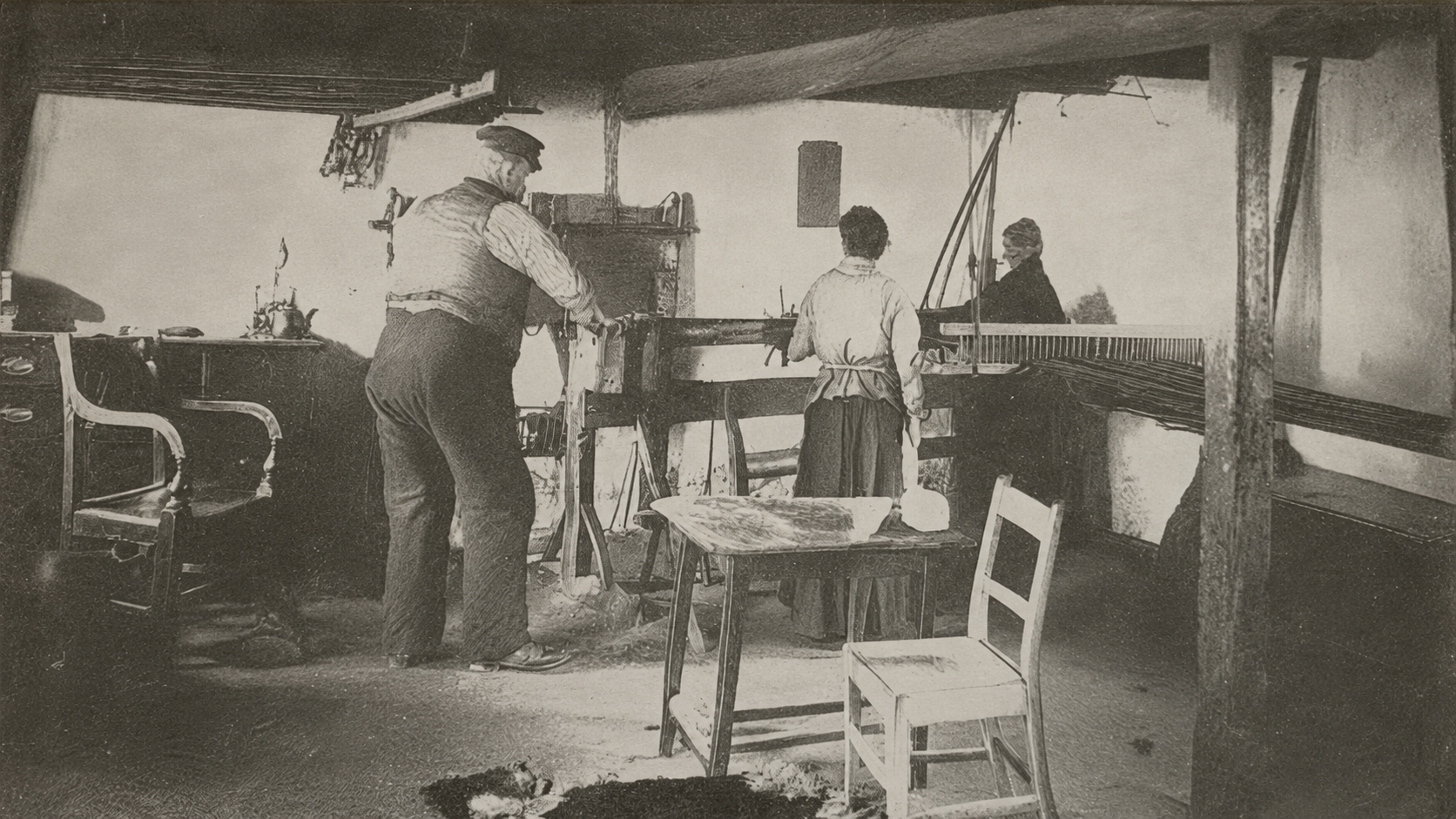
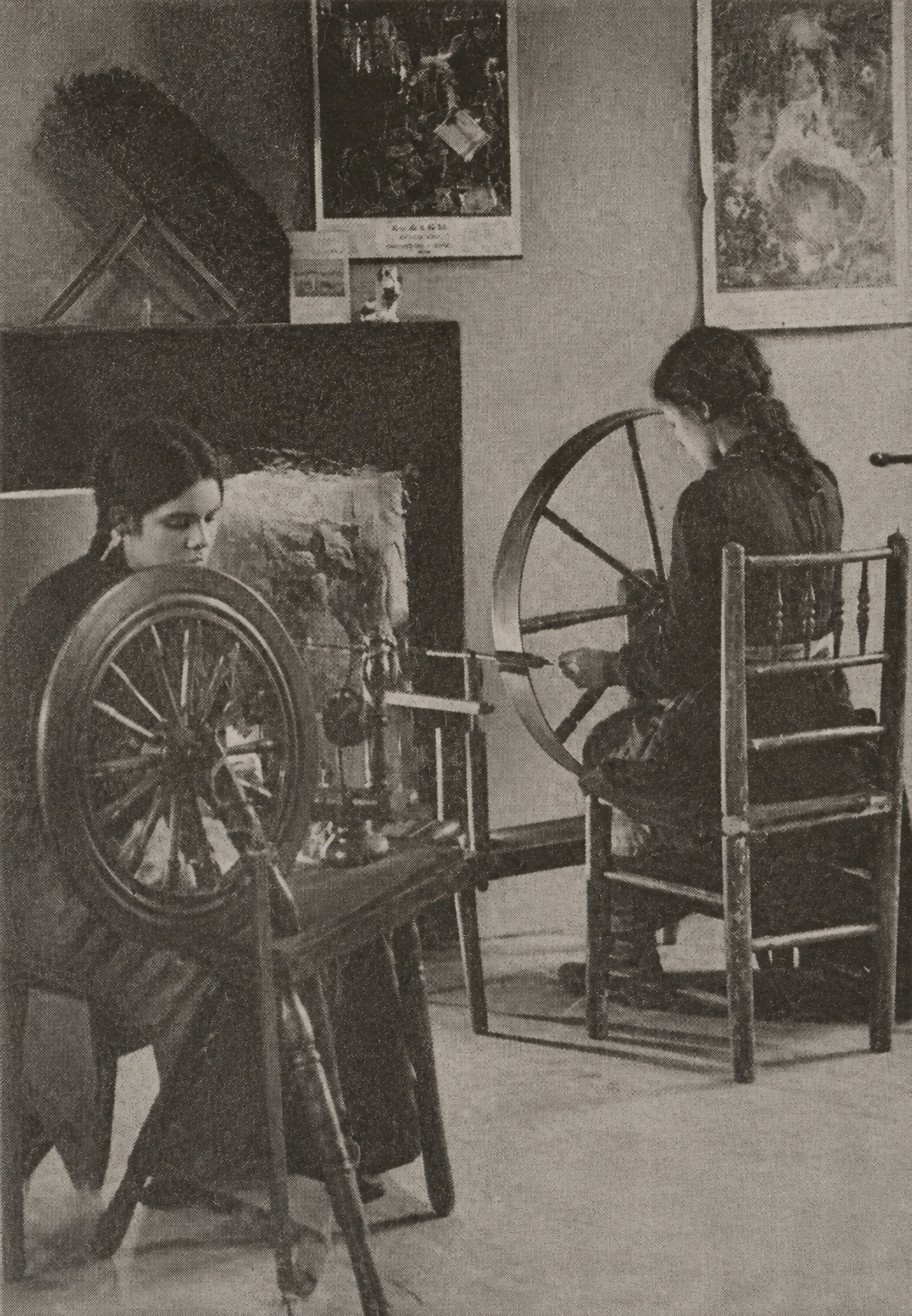
Agents brought cotton thread south from Glasgow and Paisley. In Girvan, families wove it on handlooms in their homes, and the woven cloth returned to the larger manufacturing centres for finishing and sale. The work occupied rooms across the town and tied their occupants to markets far beyond Carrick.[1]
Around the 1790s, roughly a hundred looms worked in Girvan. By 1838, an official inquiry counted 1,800 in the town and its vicinity. Weaving had helped Girvan grow, drawing in workers and making family homes into places of production. As the trade declined, weaving families faced falling earnings, shortages of work and, for some, the decision to leave Scotland.[1][2]
The change took decades. Looms continued to work as earnings fell, and families sought ways to make a living from a trade that offered less and less security. The railway arrived during these difficult years. Harbour improvements and visitors brought other business, but weaving families still needed relief after the first trains began to run.[6][9]
A trade carried on at home
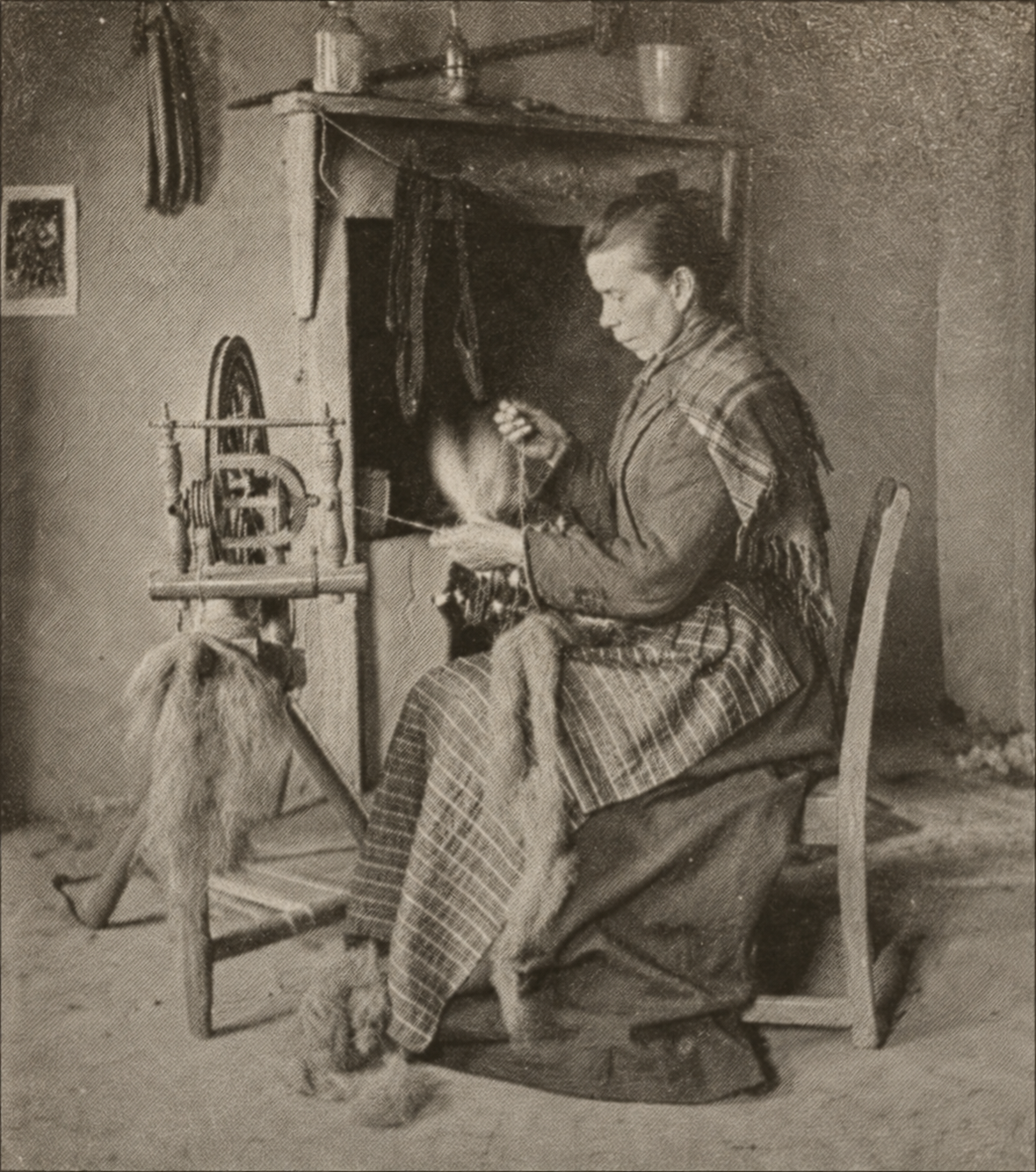
Girvan's weavers had worked with wool before cotton became important. By the early 1790s they were trying the cotton manufacture spreading across Scotland. It connected them to a growing industry, but control of their work lay largely outside the town. Agents supplied the thread, collected the cloth and paid the weavers. Earnings depended on the orders available, the rate paid for each piece and the charges deducted along the way.[1][2]
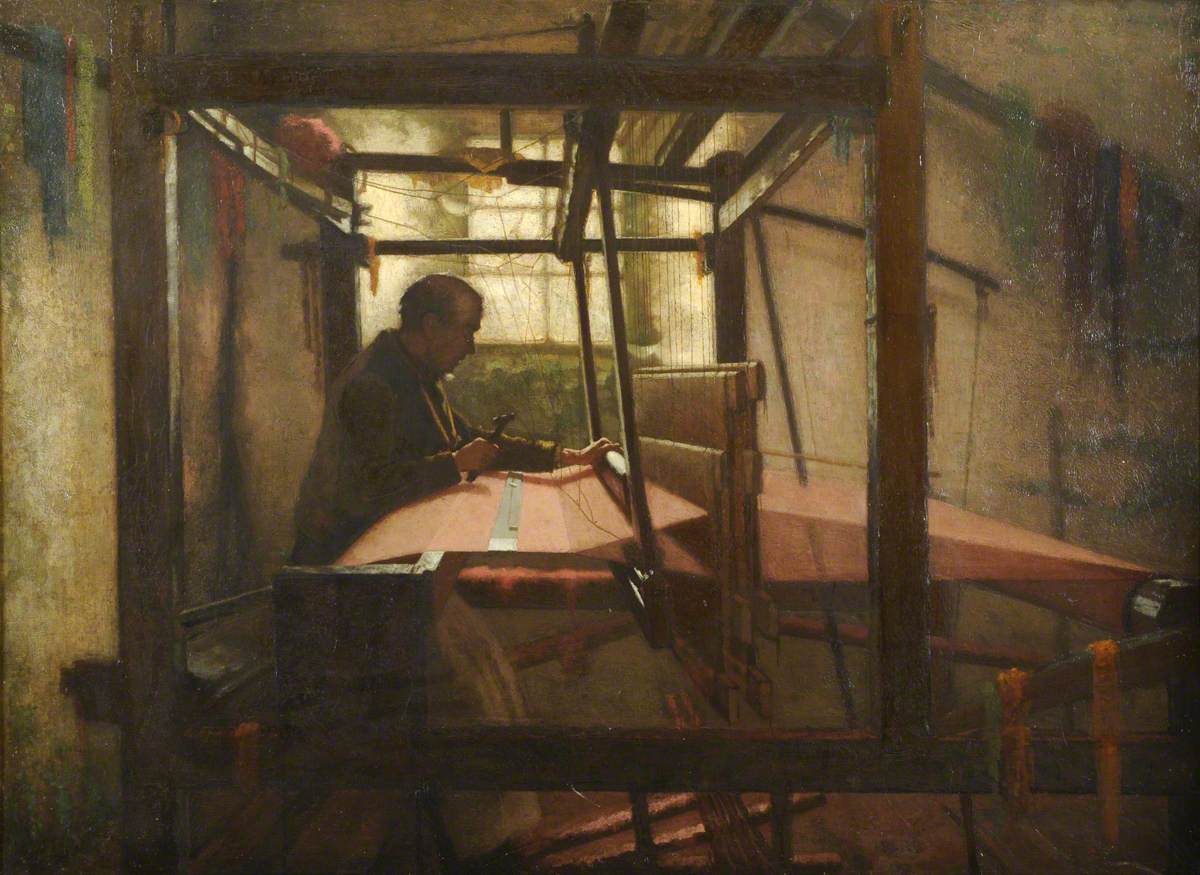
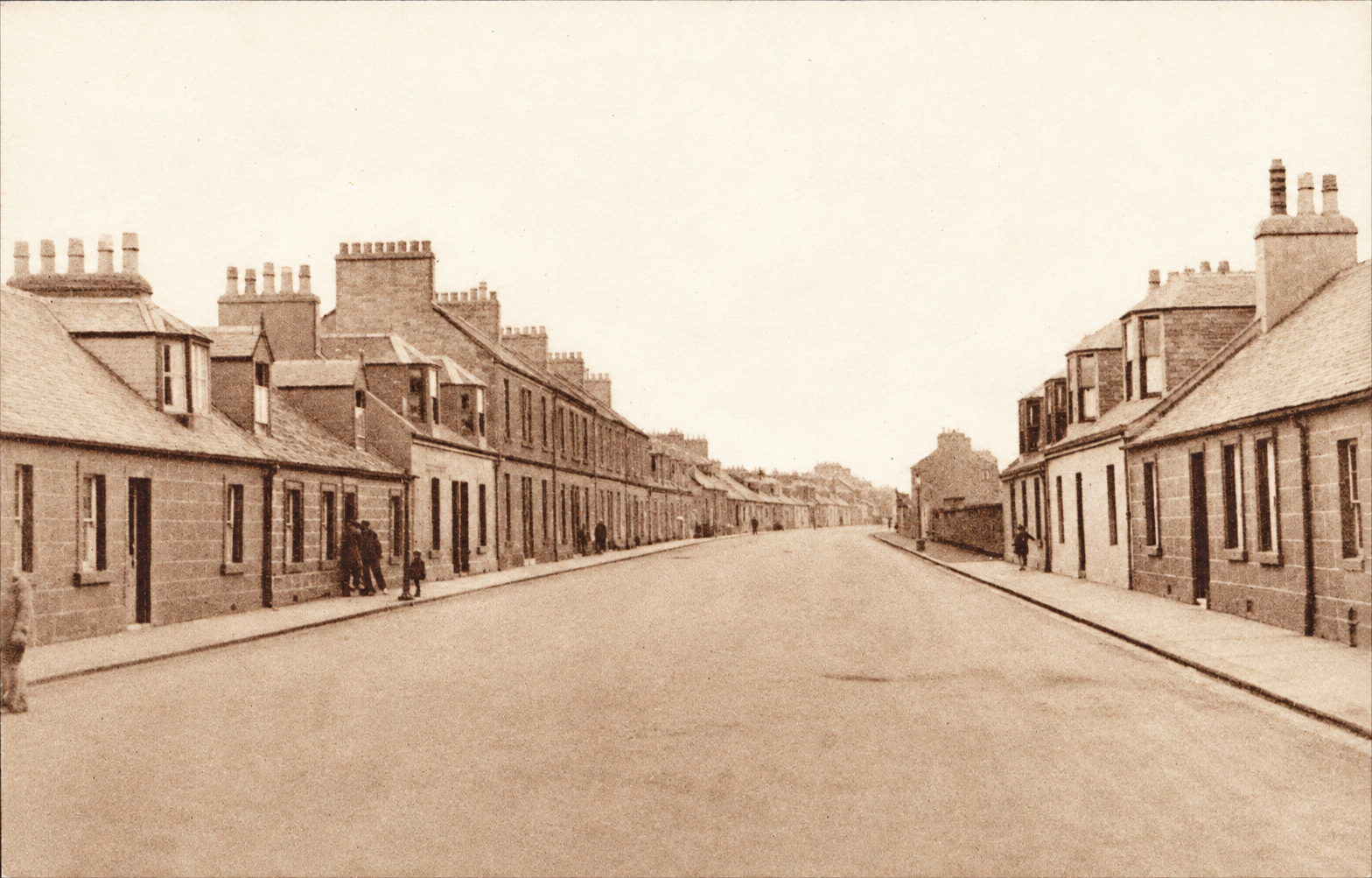
Weaving became especially important around Piedmont, on Girvan's southern side, later known as Glendoune. Ballybroke Street and Wilson Street housed many of the people engaged in the trade. Greenside was associated with bleaching the cloth before it continued towards the finishing mills.[9]
The loom was not always the family's only source of work. In his parish account of 1837, the Rev. Peter M‘Master described cotton weavers taking a few days in the harvest fields. Reapers usually earned a shilling and sixpence a day without food, with higher rates when a late harvest or threatening weather made labour more urgent. He thought the extra hands from the weaving trade helped keep local harvest wages low.[14]
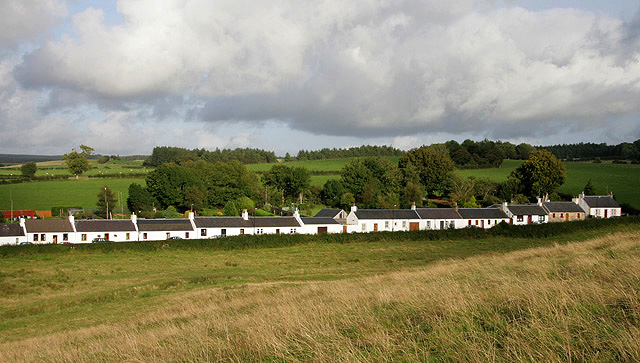
Some of Girvan's cottages stood with their doors below the level of the road. At the south end, the houses were so low that Robert Heron, visiting in 1792, thought them:[2]
‘rather caves dug in the earth, than houses built upon it.’[2]
More substantial houses stood towards the north-west, close to the river. Weaving expanded among these cottages as workers came to the town.[2]
Many weaving families were Irish-born or of Irish descent. Migration across the North Channel was already part of Girvan's history before the Great Famine of the 1840s. Girvan and Maybole developed substantial communities of Irish weavers, employed in the same textile trade that linked Carrick to Glasgow and Paisley.[1]
Girvan within Carrick
The trade extended inland through Maybole, Crosshill and Kirkmichael, and south to Ballantrae. Yet its fortunes differed from place to place. Between 1828 and 1838, Girvan and its vicinity retained a recorded total of 1,800 looms. Over the same ten years, the combined Maybole, Crosshill and Kirkmichael total fell from 1,700 to 1,360. Ballantrae had 65 looms in 1838.[1]
Girvan retained more looms than the three inland communities combined. It was a substantial centre of a trade already contracting elsewhere in Carrick.[1]
The fabrics varied too. Maybole's weavers made muslins, pullicates—cotton handkerchiefs—and imitation thibets, as well as some coarse woollens and blankets. Different kinds of cloth faced different markets and different competition. A fall in demand for one fabric could leave its weavers searching for another kind of work.[1]
Why weaving declined
Powered machinery changed the economics of making cloth. Mills could produce large quantities more quickly, putting pressure on the prices handloom work could command. Girvan's weavers depended on manufacturers and agents for orders, so changes in that wider industry reached directly into their homes.[1]
The finer fabrics made on Scottish handlooms sheltered much of the trade from immediate replacement. By the late 1830s, coarser calico weaving had already lost work to machinery, while finer work continued. Weavers switched fabrics as fashions and demand changed, trying to find work for their skills.[1]
Low wages also kept handlooms in use. In Glasgow, blue-and-white stripes and checks were still woven by hand because labour was cheap enough to make it worthwhile. Higher wages would have made power looms the preferred option. For the weaver, keeping an order could therefore mean accepting a poor return for long hours. Employment survived at the expense of earnings.[1]
Agents' charges further reduced what reached the household. Giving evidence to the same inquiry, Maybole weavers complained that some agents also ran shops and pressed them to accept goods as payment before supplying more work. They challenged charges for materials, equipment and carriage. The payment for a finished piece could be reduced before it was available for food and other household needs.[1]
The weavers themselves looked beyond machinery for remedies. In Maybole they called for gradual repeal of the Corn Laws, which restricted grain imports and helped keep bread prices high, as well as lower taxes and action against agents’ practices. They wanted relief from the cost of living and from the trading arrangements that reduced their earnings.[1][12]
By the middle of the century, Girvan had grown to a town of about 7,300 people. Hand weaving was losing ground across the west of Scotland, and Girvan's population began a long decline. The town had expanded around work that was becoming increasingly insecure.[9][10]
At the end of 1862, work was scarcer in Maybole than in Girvan. Maybole men waited for new webs—lengths of cloth to weave—while Girvan's weavers had work. Crosshill's weaving workforce had fallen to about 200, compared with about 400 five years earlier. Others had moved to Glasgow or taken up different occupations. Within months, Girvan was struggling to sustain relief for its own weaving families.[4][6]
Learning and organising
Three Girvan handloom weavers made an agreement to take turns at school. While one studied, the other two worked to support him. The agreement spread the cost of education between them.[3]
They carried the agreement through. Two later went into prosperous businesses in the town. The third, Jacky McCafferty, continued in education and became the Dounepark schoolmaster. Between them, they had found a way to pay for the time that schooling required.[3]
Robert Cadden knew the work from childhood. Born in Girvan in 1865, he wound pirns—the small bobbins that supplied thread to the loom—before and after school. Weakness in his legs had delayed his schooling until he was eleven, and he stayed for only two and a half years. He then spent fourteen years as a weaver’s assistant. In 1895 he published his poems as Stray Threads from the Loom.[15]
The co-operative shop began with another agreement between weavers. Having read about the Rochdale co-operative experiment, a group decided to follow it in Girvan. They met on 18 June 1860 and began contributing threepence a week.[5]
By August 1861 they had accumulated about £20. With a small loan added, they took a four-year lease of a room and kitchen at an annual rent of £3 5s and fitted the premises as a shop. Small weekly contributions had become enough to start trading. Members subsequently received a dividend based on their purchases, giving them a share in the shop's returns.[5]
In 1863, members, families and friends gathered in the Parish Schoolroom for tea, singing and addresses. In just over three years, the weekly savings scheme had produced a shop and a society with members and their families taking part in its activities.[5]
Relief and emigration
By April 1863, Girvan's relief committee was spending about £30 a week on a soup kitchen and work breaking stones by hand. Donations supported the fund, but after eight weeks of struggling to meet the cost, the committee was preparing to stop. Demand for food and work was still increasing.[6]
A £100 cheque from the Stewartry relief committee gave the scheme a reprieve. The Rev. William Corson received the money and passed it to Girvan's committee. Another £5 came from Dalziel Relief Committee and £1 from the Rev. Robert Wright, both through Samuel M‘Clymont, Girvan's chief magistrate. The incoming donations would keep the kitchen and relief work going for a few more weeks.[6]
In a petition for assistance, weavers described prolonged partial employment and average earnings of four shillings and sixpence a week over the preceding three years.[7]
Three years of partial employment left little chance to put money aside against the next shortage of work. Even an occupied loom could bring in too little. Soup and relief work sustained families while local supporters searched for a longer-term answer.[6][7]
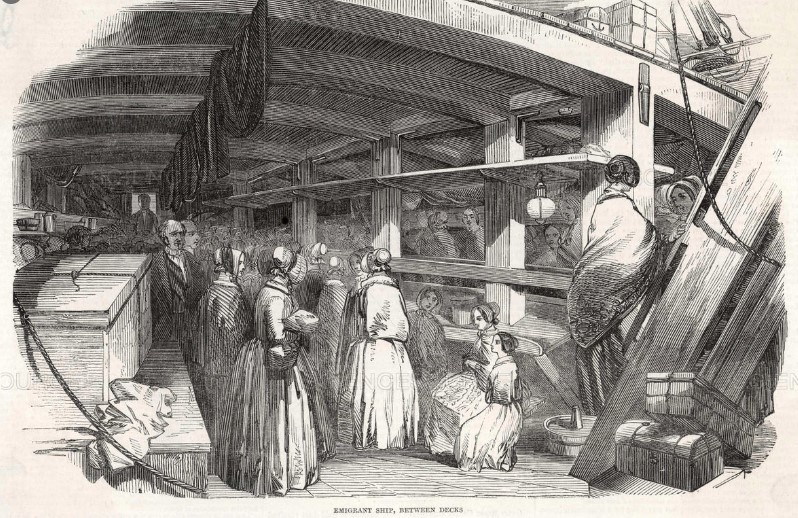
On 8 April, 72 people left Girvan intending to reach Queensland. Another party departed in June. That month also brought an improvement in weaving employment, but pay remained poor. More work did not settle the problem of making a living from it.[6]
The need for other work continued long after the crisis of 1863. In February 1875, the Ayr Observer reported that handloom weaving was still dull and that many hands were employed outdoors. They had improved side streets and levelled ground near the harbour. Under Mr M‘Broom’s supervision, a circular mound had been made around the storm-signal pole, turfed at the sides and sown with grass on top.[16]
Elsewhere in Carrick, weavers had been organising to leave for years. Maybole's emigration society was formed in 1852 and sought support from ministers and local businessmen. In August 1863, the Glasgow Emigration Committee allocated £150 towards a Maybole scheme, conditional on at least an equal sum being raised locally.[8]
Leaving was one response; securing more work at home was another. In July 1867, Maybole weavers gathered at David Cuddy's beaming shop and appealed for an employer willing to supply them. Years into the trade's decline, they were still trying to obtain the work they knew how to do.[8]
The town beyond weaving
Girvan's first railway opened in 1860, connecting it northwards through Maybole and Ayr. The town's weaving trade had long depended on connections with Glasgow and Paisley; rail now carried people and goods along a new route into that commercial world.[9]
Visitors already came by road and sea. The railway made Girvan easier to reach from the industrial towns to the north, while the later line towards Stranraer, opened in 1877, ended its position as a terminus. Passengers could now travel through Girvan on the route south, as well as arrive from Ayr and Glasgow.[9]
Harbour improvements supported a working coast. A new pier and breakwater followed in 1881, and the harbour continued to handle coal and fishing boats as Girvan developed its visitor trade. Hotels and guidebooks promoted the beach, sea air and excursions into Carrick. Tourism grew alongside fishing, commerce and civic investment.[9]
The town also built for its own people. Stair Park was given for public use in 1875, and the McKechnie Library and Reading Room opened in 1888. The library and reading room extended the provision for learning in a town where weavers had once supported one another through school.[3][9]
Home weaving survived into the town’s later Victorian years. A photograph reproduced in Girvan Memories shows a loom sharing a room with a hearth, chairs and three people. The book dates it to about 1890 and places it in Wilson Street or Gas Lane, now Firth Terrace. The machinery of the old trade was still part of a domestic room.[17]
These developments accompanied continuing population loss. The town gained new connections and public buildings while families lost the work that had brought so many people to Girvan. Fishing, commerce and visitors became increasingly important, but the change stretched across generations.[9][10]
When Cadden died in 1938, The Scotsman remembered him as one of Girvan’s last handloom weavers and reported that he had worked at his home at Laggan Whilly. The poet who had begun by winding pirns had lived well beyond the years when weaving dominated the town.[18]
Weaving had provided a living for families across Girvan. Its decline was felt in household earnings, in the demand for relief and in departures from the town. Some families sought a future in Queensland; others continued to seek work at home. The co-operative shop, begun with threepence a week, was one attempt to improve their circumstances with the means they had.[5][6][7]
---
Terms and context
Handloom and power loom. A handloom is operated by the weaver using hands and feet. A power loom uses mechanical power to drive the weaving process. Mechanisation increased output and changed the cost of producing cloth.[1]
Web. A length of cloth being woven. For a weaver supplied by an agent, waiting for a fresh web meant waiting for another piece of work.[4]
Pullicates and thibets. Pullicates were cotton handkerchiefs. Thibet was a name used for dress fabrics, including wool and cotton mixtures. The inquiry lists “imitation thibets” among Maybole's products.[1]
Corn Laws. Restrictions and duties on imported grain that protected British agriculture and helped keep bread prices high. “Corn” meant grain generally, including wheat. Repeal was passed in 1846, after the Maybole demands described here.[12]
The Rochdale co-operative experiment. In 1844, 28 working men pooled their money to open a shop in Rochdale. Their member-owned business became an influential model for other communities. Girvan's weavers read about it and set out to establish a shop of their own.[11]
Stone-breaking relief work. Work provided during unemployment or hardship in return for assistance. Workers broke large stones into smaller pieces by hand, generally for road making and repairs. Girvan's scheme was run alongside its soup kitchen by the relief committee.[6][13]
Pounds, shillings and pence. There were 20 shillings in a pound and 12 pence in a shilling. The abbreviations were £, s and d. Threepence was 3d; four shillings and sixpence was 4s 6d. The shop's £3 5s annual rent meant three pounds and five shillings. These are historical amounts, not equivalents in today's money.
References
1. J. C. Symons, Reports from Assistant Hand-Loom Weavers’ Commissioners (1839), report on the south of Scotland, pp. 3, 5, 19, 21 and 37–38.
2. Robert Heron, Observations Made in a Journey through the Western Counties of Scotland, second edition (1799), vol. II, pp. 314–315.
3. R. Lawson, Places of Interest about Girvan with Some Glimpses of Carrick History (1892), pp. 21 and 141.
4. “The Weavers of Maybole”, Scottish Banner, 20 December 1862, p. 5.
5. Girvan Co-operative Society: Glasgow Sentinel, 5 December 1863, p. 6; Renfrewshire Independent, 16 April 1864, p. 2.
6. Girvan relief and emigration: Ayrshire Express, 18 April 1863, p. 8; Ardrossan and Saltcoats Herald, 18 April 1863, p. 3, and 20 June 1863, p. 3.
7. New Zealand Gazette, 4 July 1863, no. 26, pp. 256–257.
8. Maybole emigration and employment: Glasgow Sentinel, 10 July 1852, p. 5; Ardrossan and Saltcoats Herald, 22 August 1863, p. 6, and 3 August 1867, p. 5.
9. Francis H. Groome, Ordnance Gazetteer of Scotland (1883), vol. III, Girvan entry, pp. 88–89.
10. Edward Cheshire, The Results of the Census of Great Britain in 1851 (1854), Table XVIII, p. 69.
11. Co-op, “A history of co-operation”.
12. UK Parliament, “Petitions and the Corn Laws”.
13. Peter Higginbotham, Workhouse Glossary, “Stone Breaking”.
14. Rev. Peter M‘Master, “Girvan”, The New Statistical Account of Scotland, vol. V (1845), parish account dated September 1837, p. 399.
15. Malcolm J. Finlayson (compiler), An Anthology of Carrick (1925), p. 365.
16. “Girvan”, Ayr Observer, 20 February 1875, p. 3.
17. James McMeikan, Girvan Memories: A Walk Down Memory Lane (1993), p. 41, photograph 68.
18. “Weaver Poet Dead”, The Scotsman, 19 May 1938, p. 8.
Image credits and enquiries
Images are included to illustrate Girvan and Carrick’s history for educational purposes. Sources and photographers are credited where known. If you hold rights in an image, please contact us so we can review its use, correct the credit or remove it.
Pass the story on