Civic Girvan
A shilling a year for Girvan's green
Key dates
- January 1875
Park ground is offered to Girvan for one shilling a year.
- 1909
The Pierrots entertain summer audiences at the bandstand.
- 1922
Girvan’s war memorial is unveiled.
- 2015
Conservation work restores stonework and bronze plaques.
Show all 7 dates Show fewer dates
- 2022
The town marks the memorial’s centenary.
- 2025
Standing with Giants silhouettes surround the memorial.
- June 2026
ACE completes its purchase of the bandstand.
In January 1875, the Earl and Countess of Stair offered Girvan a public park for one shilling a year.
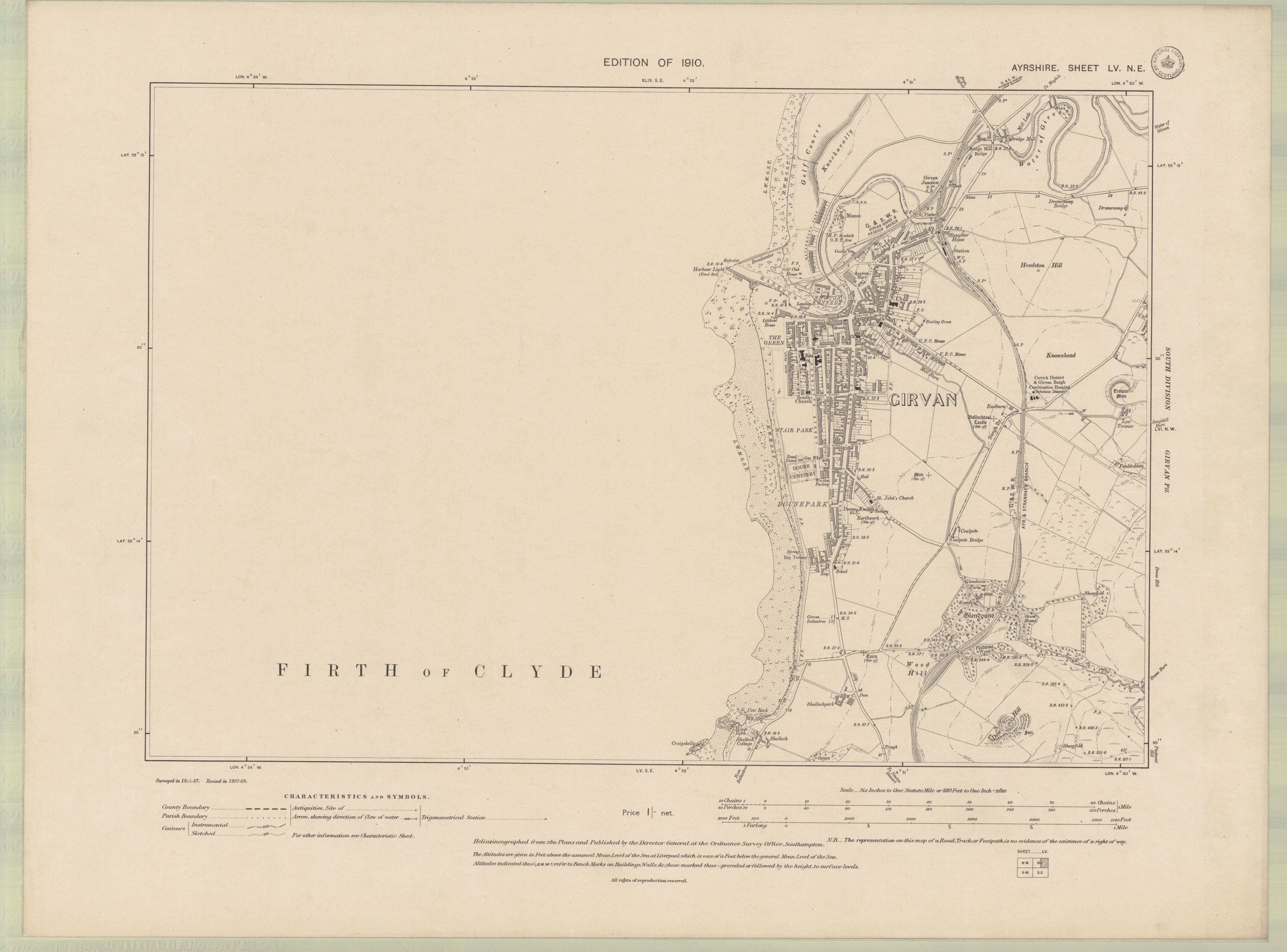
The town council had asked for a lease of the remaining unfeued Green — ground not yet granted for development — to preserve it for the inhabitants' recreation. At its Tuesday evening meeting, the council heard the Earl's reply to town clerk John B. Ross. “Lady Stair and myself,” he wrote, were offering the ground to the council and its successors.[1]
The terms were clear: it was to be used “as a park for recreation, and for no other use whatever”. The offer covered ground south of a line from Duncan Street to the high-water mark and west of a line from Henrietta Street to the boundary of Glendoune. Mineral rights and roads serving Bargany estate tenants were reserved, while the Earl's factor was to prepare a plan and arrange the details. Ground to the north would remain available for development.[1]
The council instructed its clerk to send a suitable acknowledgement of the gift. The nominal rent and conditions were part of the offer that secured a place for recreation beside the shore. Over the following decades, people came to walk, listen to music and enjoy the seaside. Later, Stair Park became the place where the town gathered to remember its war dead.
Music beside the shore
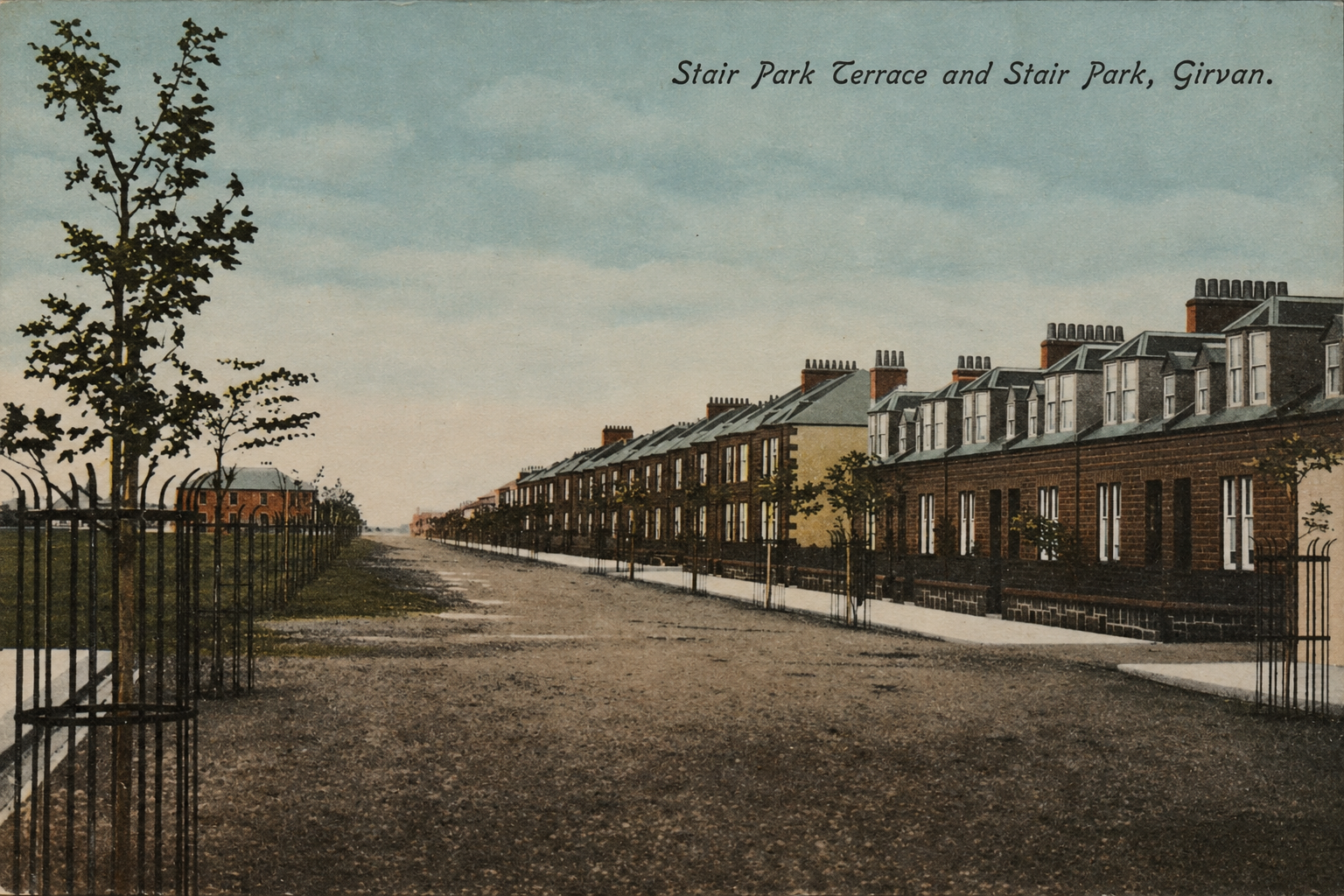
The old postcard of Stair Park Terrace shows houses facing a broad street, young trees along the park railings and open space beyond. Roads and housing would alter the park's edges, but recreation remained part of its life.
In 1909, the Pierrots brought their season at the Stair Park bandstand to a close with selections from Maybole's prize brass band. The local report noted that the entertainment lasted longer than usual.[2]
Behind those performances lay the work of finding a cast. In July 1911, the bandstand's manager advertised for a baritone, comedians and instrumentalists who could handle gags and sketches. Three years later, comedian and mimic Ken Williams gave the Girvan bandstand as his address for that week's engagement while advertising for work in September.[3]
The building's project history also records its use as a tea kiosk. Refreshments and performances belonged to the same seaside trade, drawing residents and visitors into the park.[4]
A place of remembrance
After the First World War, Stair Park took on a new civic role. In February 1920, the Sunday Post reported that Girvan War Memorial Committee had received a design for an obelisk from Ayr architect James A. Morris. It was intended for a rise in Stair Park. The estimated cost was £2,000, and a large part had already been subscribed.[5]
The memorial was unveiled in 1922. Its bronze plaques carried the names of Girvan's dead, while the shaft recorded places of conflict. A further dedication and names commemorated those lost in the Second World War.[6]
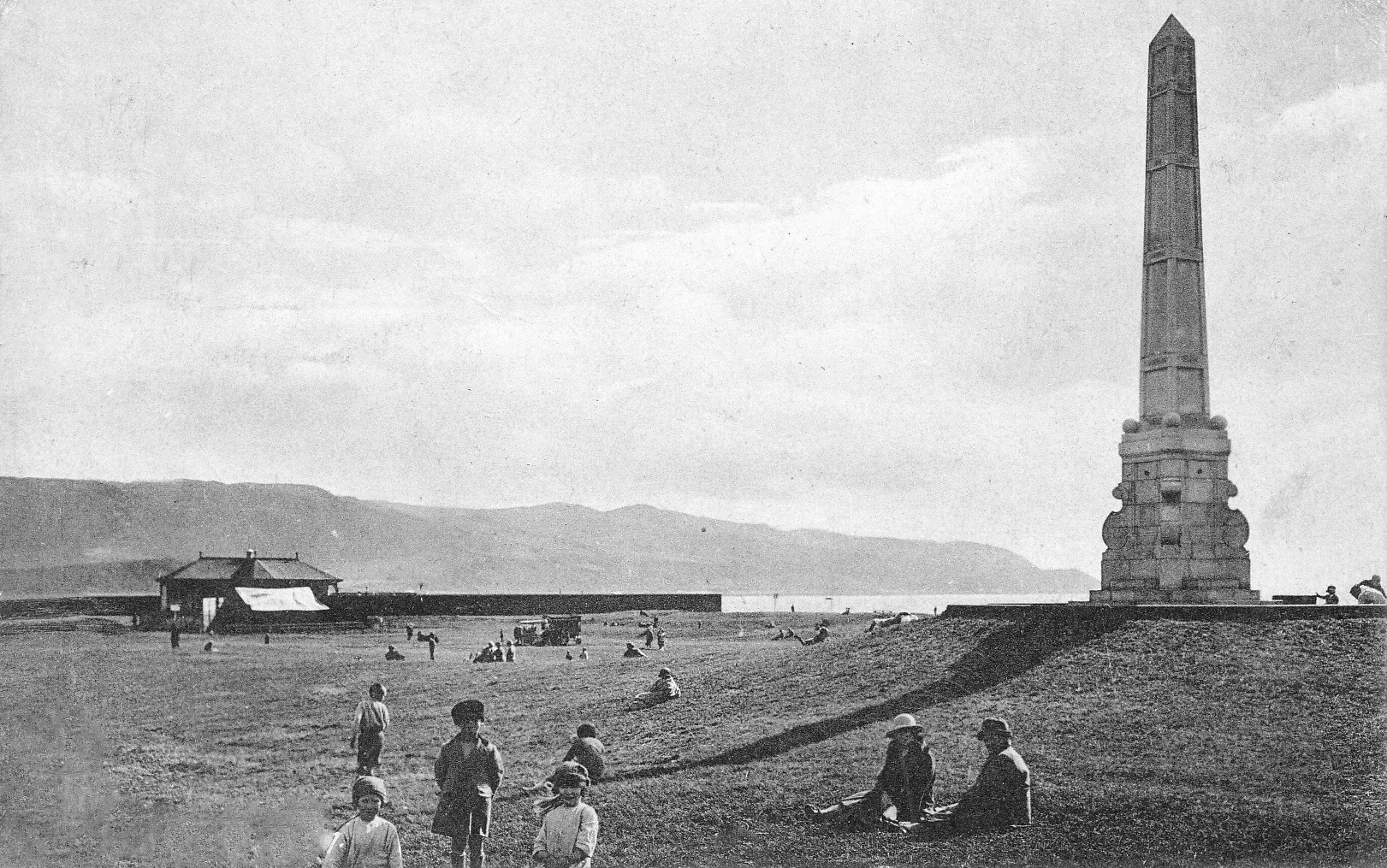
The historic photograph brings the memorial and the park's everyday life into the same view: people sit on the grass below the obelisk, children stand near the camera, and the beach stretches away towards the hills.
Conservation work in 2015 cleaned and repaired the stonework, renewed pointing and treated the bronze plaques. At the centenary service on 22 October 2022, readings, pipe music and hymns drew on the programme used at the original dedication.[7]
Figures across the grass
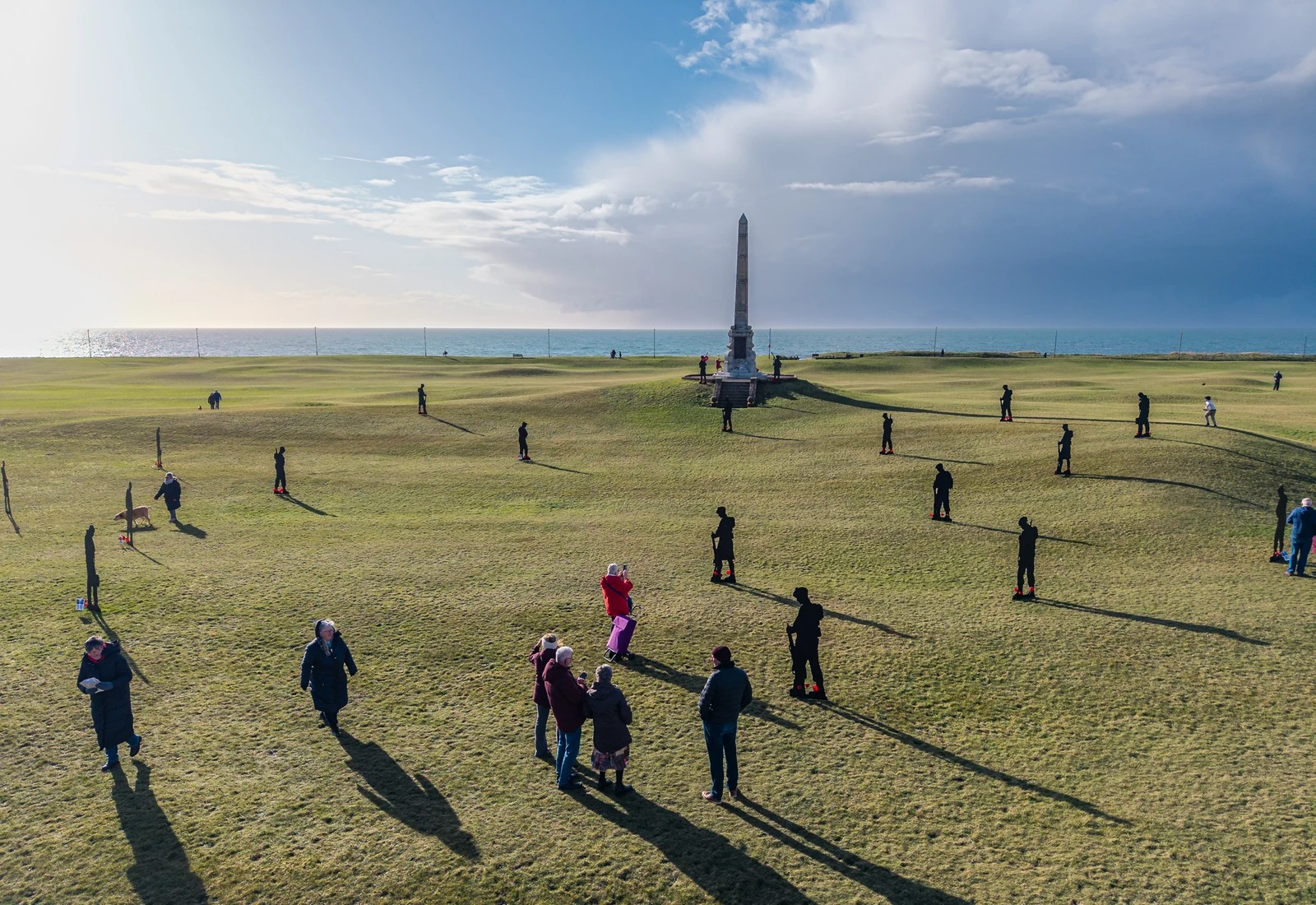
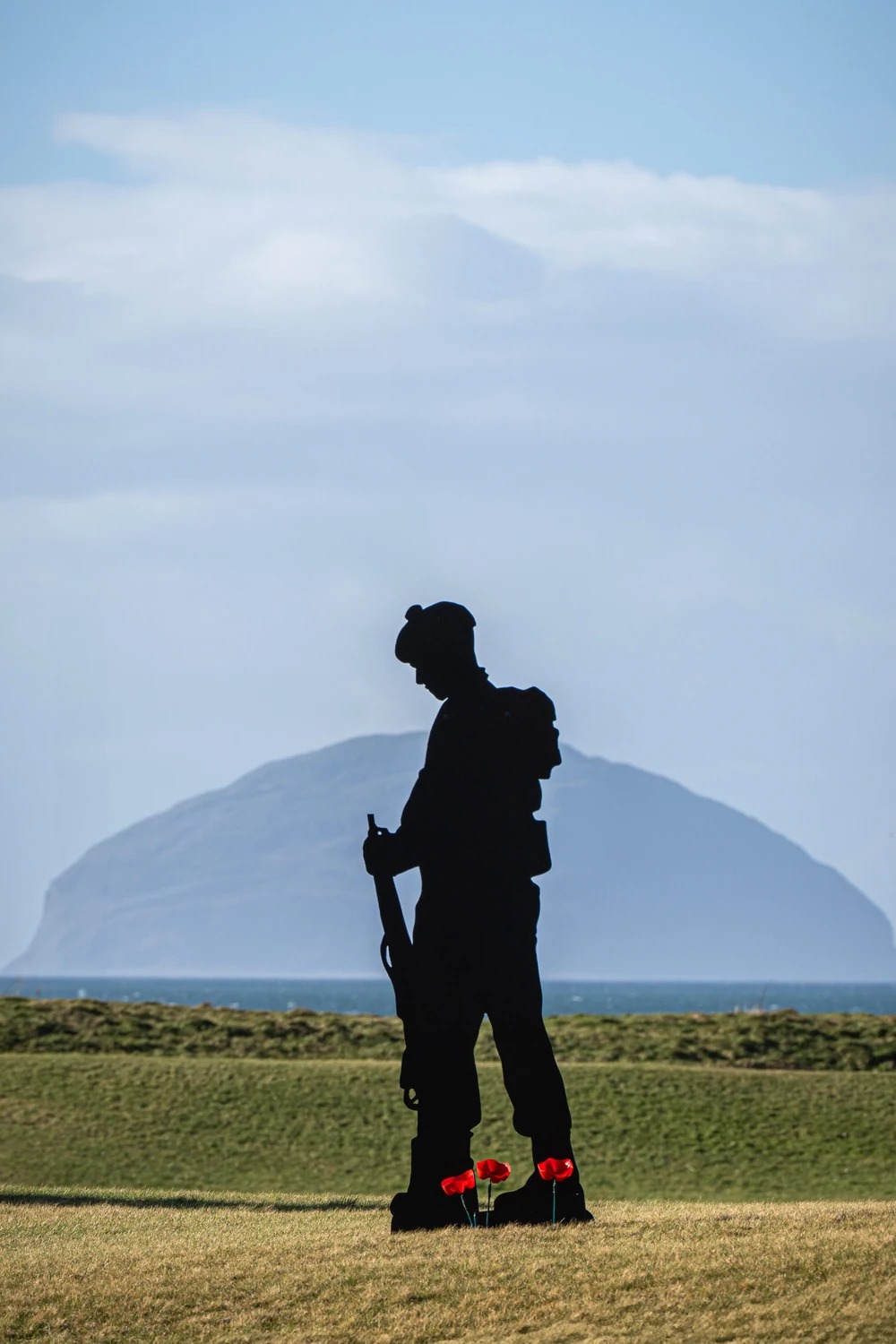
In February 2025, black soldier silhouettes stood across Stair Park around the war memorial. The Standing with Giants installation changed the familiar open ground into a field of individual figures, each casting a long shadow towards the sea.
Girvan and District Great War Project gave the figures a local voice. Its announcement described QR codes linking visitors to the stories of people from the district lost in the Second World War and credited VE80 South Ayrshire with bringing the installation to Girvan.[8]
The photographs show poppies at the feet of the silhouettes and visitors moving among them. The names on the memorial and the individual stories beside the figures brought the remembrance of war into the town's shared public ground.
The bandstand has its own next chapter. In a July 2026 update, ACE reported that its purchase of the building had completed that June, with plans for a café, events and community use.[4]
Stair Park's story runs from the decision to keep land open to the many uses the town has found for it. Recreation and remembrance have shared this ground for more than a century.
Sources
[1] Ayr Observer and Galloway Chronicle, 16 January 1875, p. 2, “Girvan”.
[2] Kilmarnock Herald and North Ayrshire Gazette, 3 September 1909, p. 7.
[3] The Era, 1 July 1911, p. 31 and 17 June 1914, p. 18.
[4] ACE/Adventure Carrick, The Bandstand Project, 31 July 2026.
[5] Sunday Post, 1 February 1920, p. 3, “Latest News in a Nutshell”.
[6] Imperial War Museums, Girvan — Obelisk, WMR 13358.
[7] War Memorials Trust, Girvan, WM7856; South Ayrshire Council, Provost Opens Girvan War Memorial Anniversary Service.
[8] Girvan and District Great War Project, Standing with Giants announcement, 11 February 2025; owner photographs.
Pass the story on