Girvan after war
The park given after the war
Key dates
- 1856
The Ordnance Survey records Tile Works beside the Mill Burn.
- 1919
Colonel North Dalrymple Hamilton gives the ground to Girvan.
- 1921–1922
Unemployed men help lay out the park.
- 1923
The deed of gift is forwarded to the council.
Show all 6 dates Show fewer dates
- 1960
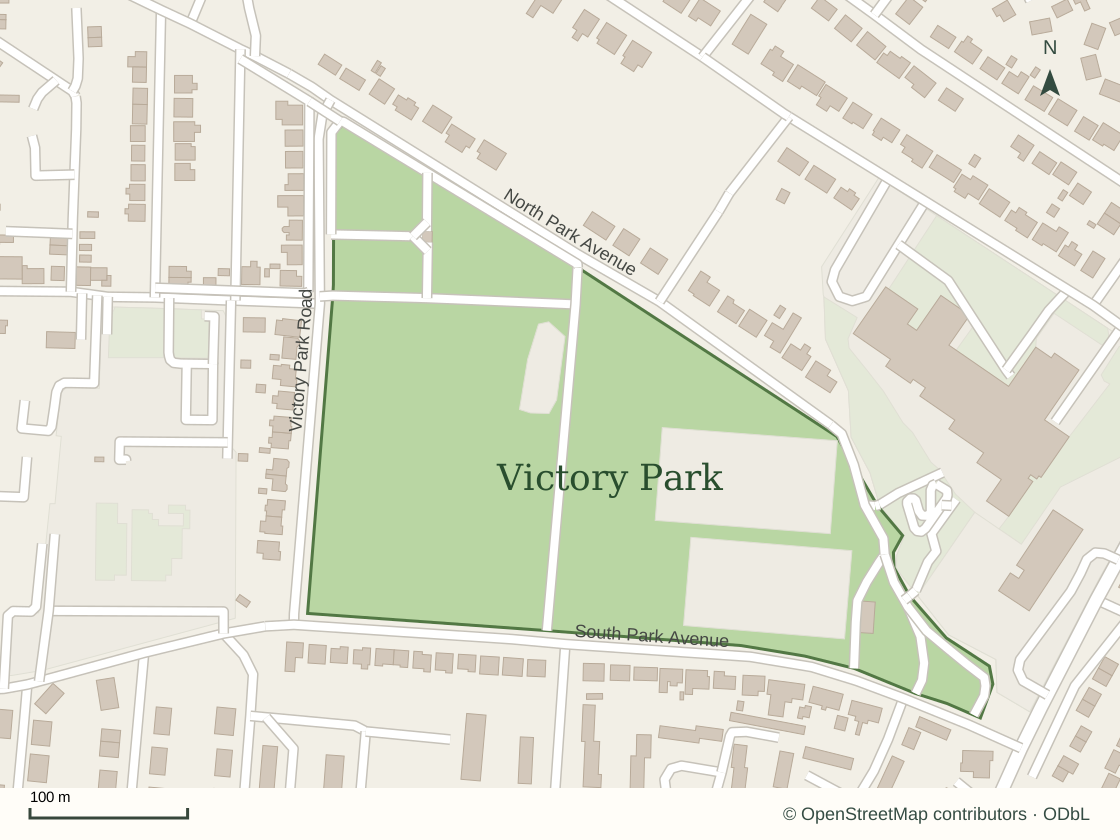
The park provides twenty acres of gardens and sporting ground.
- 8 July 2024
A floodlit all-weather pitch opens.
In the winter of 1921, unemployed men were helping to lay out Victory Park. Girvan had acquired ground for a new recreation space, but making a park of it meant work.[3]
Long before the flower beds and playing pitches, this part of Girvan had an industrial use. The Ordnance Survey map surveyed in 1856 marks Tile Works beside the Mill Burn, with the site of Ballochtoul Castle farther east. It is a different landscape from the lawns in the old park photographs: works, water and fields on the edge of the town.[2]
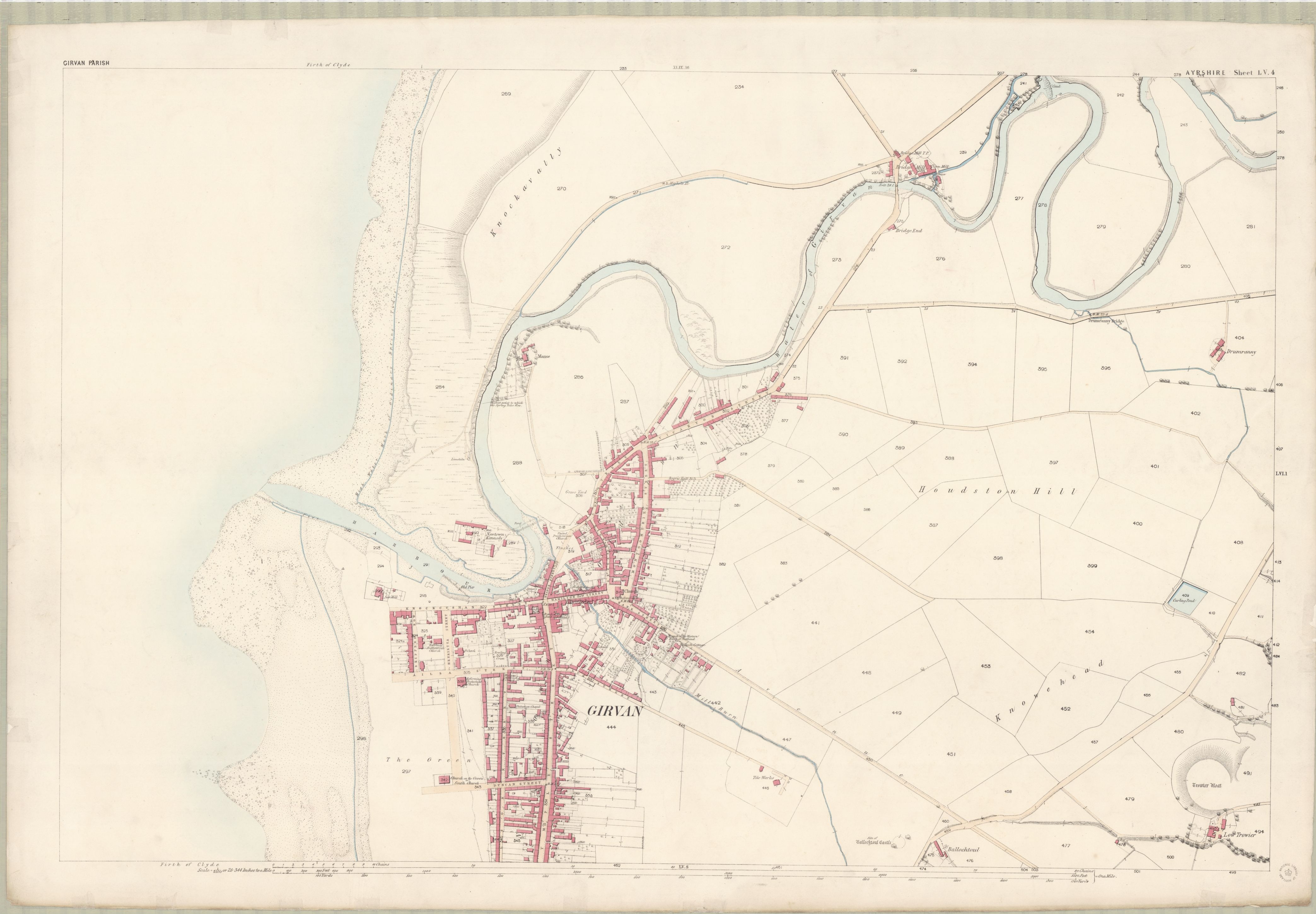
Reproduced with the permission of the National Library of Scotland. Ayrshire LV.4 · National Library of Scotland · CC BY 4.0.
Making the park
Colonel North Dalrymple Hamilton of Bargany gave the ground to Girvan in 1919, after the First World War.[1],[3],[4],[5]
In December 1921, the Unemployment Grants Committee offered to contribute 60 per cent of the wages bill for unemployed men taken on to lay out Victory Park. The offer covered work from 5 November to 30 January 1922, up to a maximum of £285.[3]
By May 1923, the Colonel had written to the council forwarding the deed of gift and feu disposition of Victory Park in its favour. The councillors expressed their appreciation and unanimously agreed to confer the Freedom of Girvan on him.[4]
The gift remembered
The ceremony followed that September in M’Master Hall. Provost Hervey wore his robes and chain of office; the Colonel appeared in his Scots Guards uniform. The Town Clerk, James Smith, read the minute admitting him as an honorary freeman in recognition of Victory Park and his other benefactions. After making the required declaration, the Colonel signed the Burgess Roll and received his burgess ticket and casket.[5]
In his reply, he explained what he wanted the park to mean. He hoped it would be a blessing to Girvan and that people would remember it had been given “in memory of gallant men who laid down their lives in the Great War”.[5]
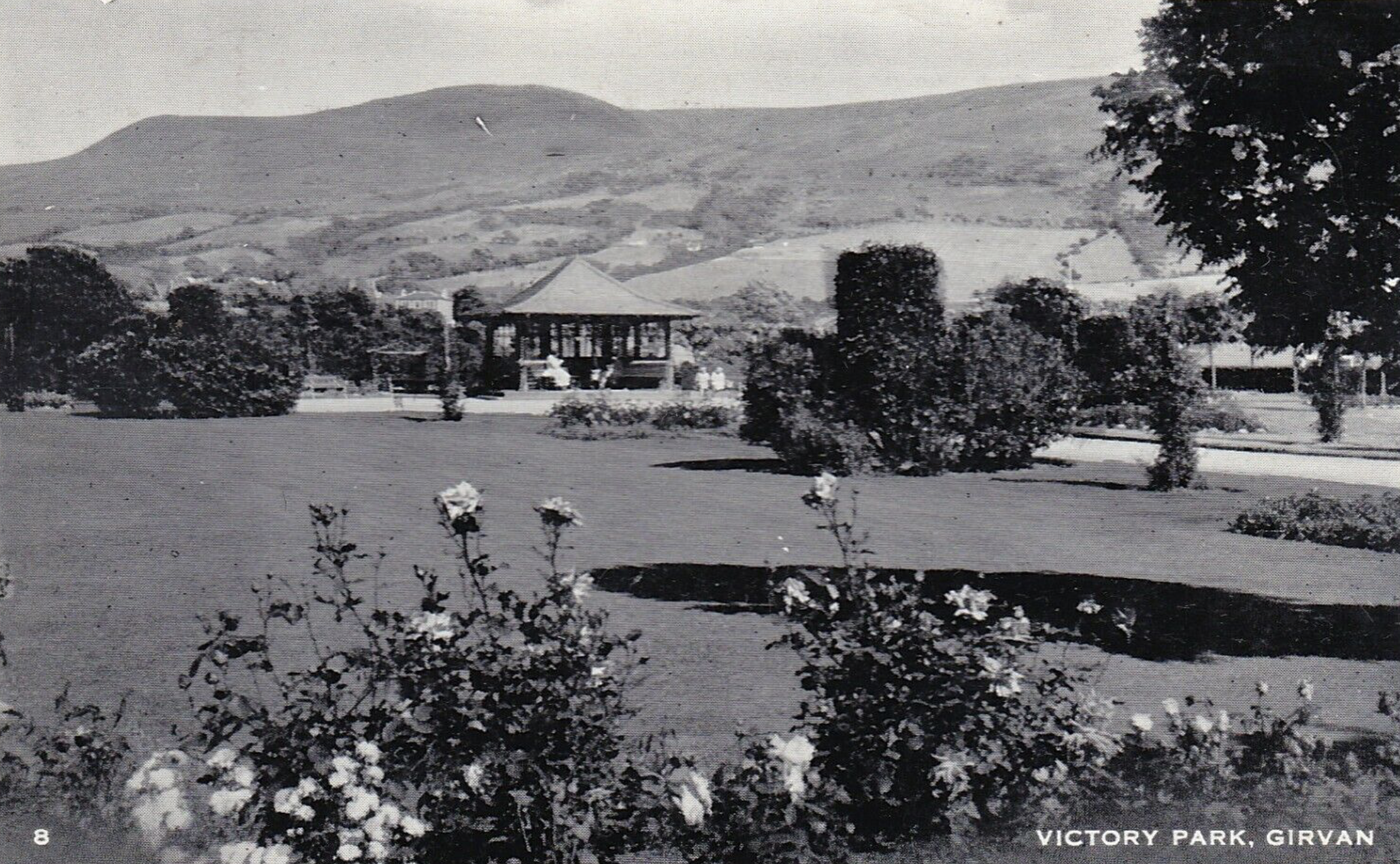
An undated view of Victory Park Gardens shows how carefully part of that ground was tended: broad lawns, beds of flowers, clipped shrubs and a shelter looking towards the hills. It records a park made for sitting and strolling as well as organised games.
Beyond the gardens
In June 1933, a machine giving short pleasure flights at Girvan struck a fence while taking off near Victory Park and somersaulted into a field. The pilot, Mr Price of London, suffered facial cuts and shock; his passenger, William Redpath of Greenside, Girvan, also suffered facial injuries. The pilot was taken to Girvan Hospital. The aircraft’s wings were badly damaged, and about twenty yards of fencing had been torn down.[6]
By 1960, Victory Park had twenty acres devoted to football, cricket and hockey pitches, alongside its quieter gardens.[7]
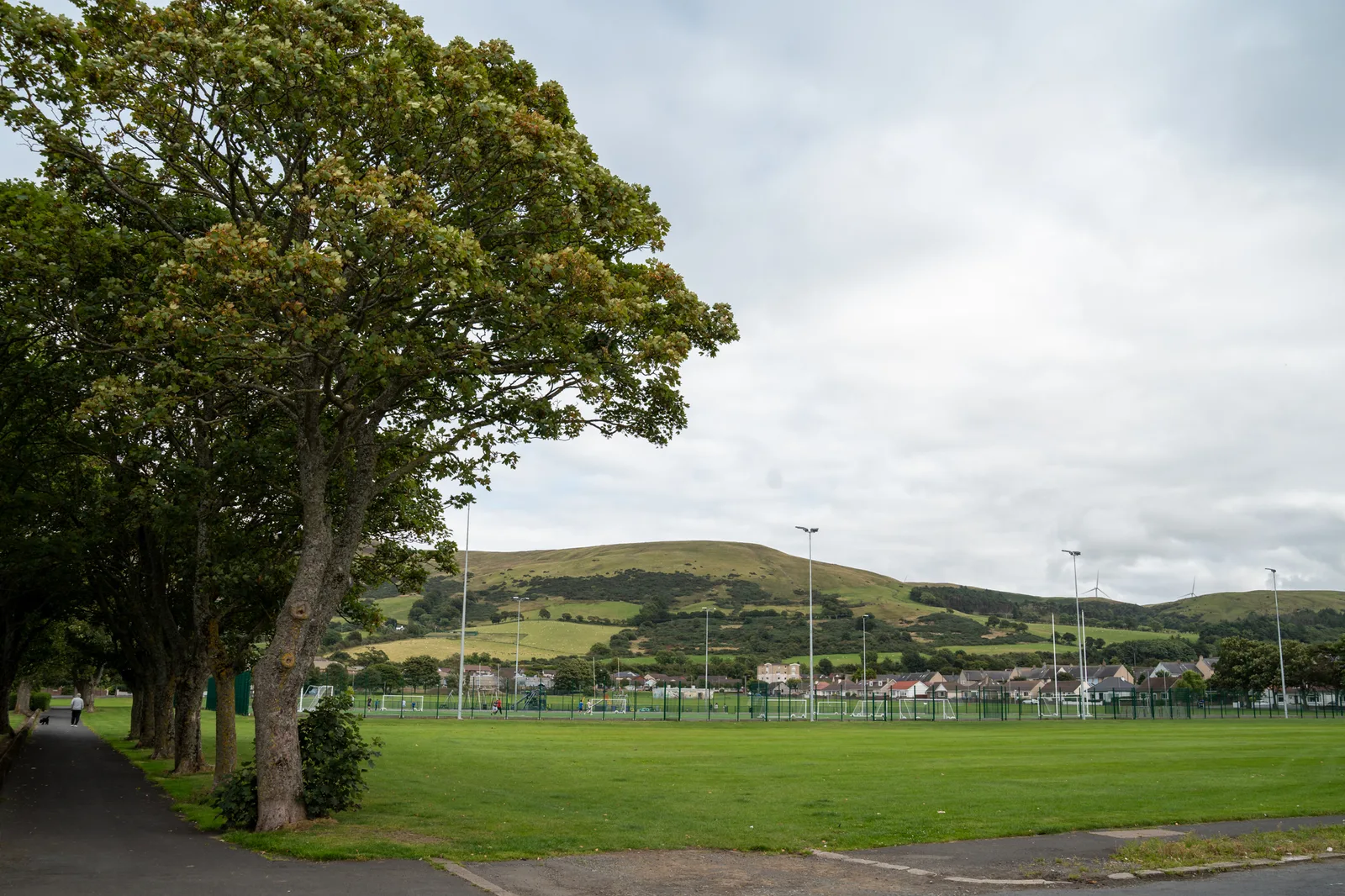
A floodlit all-weather pitch opened on 8 July 2024 for football and rugby. The park is Common Good property. A council consultation proposed a twenty-year lease of the changing pavilion to Girvan Youth Football Club at £100 a year.[9],[10]
A gathering place
The Carrick Lowland Gathering brought another kind of occasion to the park. Provost Dr James Boyle served as its chieftain in 1982. Pipe bands, dancing and competition gave the recreation ground a place in Carrick’s calendar as well as Girvan’s everyday sporting life.[8]
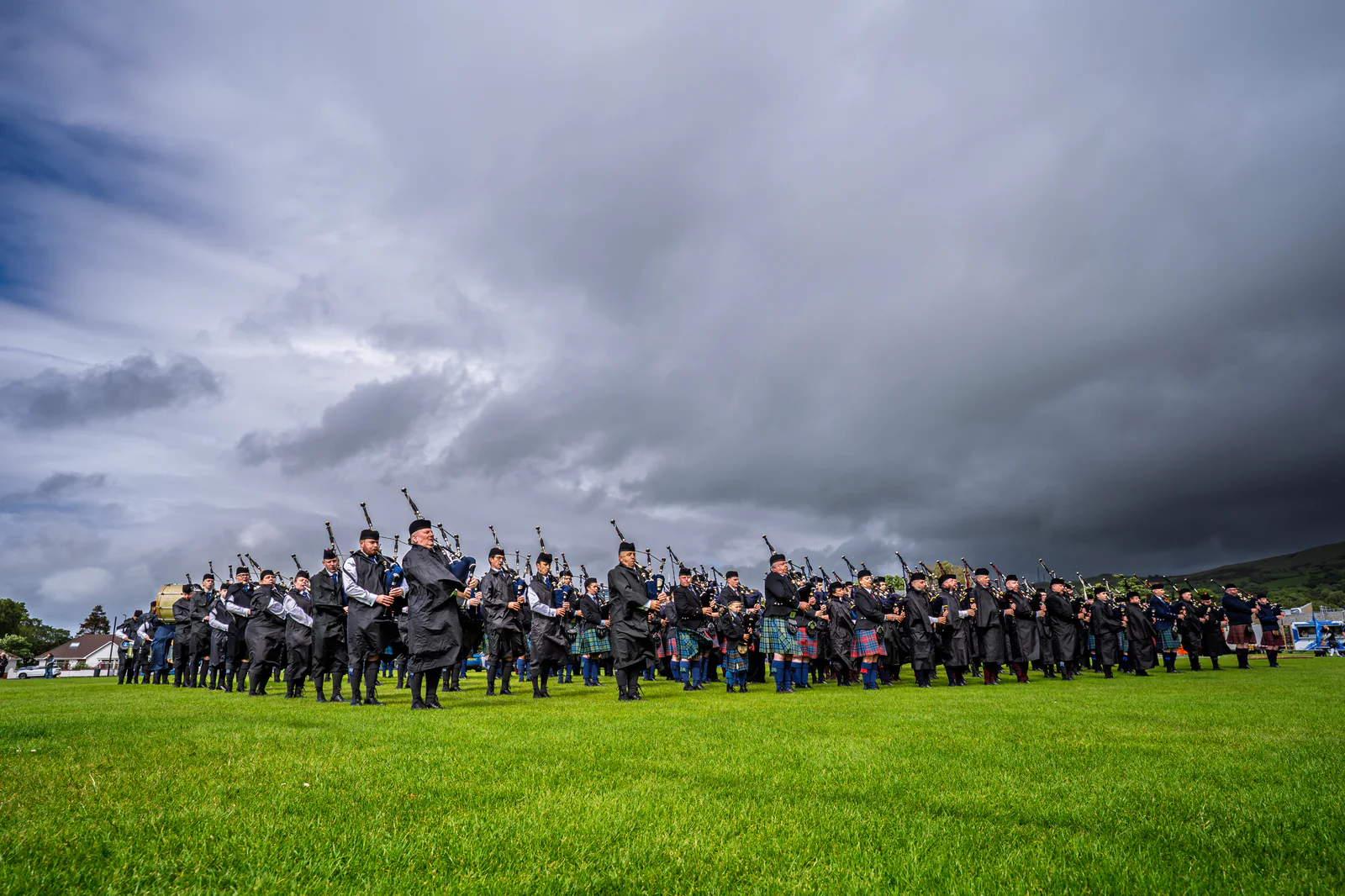
In the photograph of the 2025 Gathering, the massed bands stretch across the grass beneath a dark sky. A century after the Colonel’s speech, people were still assembling on the ground he had given to the town.
References
- South Ayrshire Council, Girvan Conservation Area Appraisal, consultation draft (2024), Victory Park account.
- Ordnance Survey, Ayrshire LV.4, surveyed 1856, published 1857: Tile Works, Mill Burn and Ballochtoul Castle site.
- Daily Record, 14 December 1921, p. 5: Girvan paragraph at the end of the Port-Glasgow poor-bill grouping.
- Daily Record, 17 May 1923, p. 9, “Freedom of Girvan”.
- The Scotsman, 27 September 1923, p. 8: freedom ceremony for Colonel North Dalrymple Hamilton.
- Daily Record, 10 June 1933, p. 5, “Plane Mishap: Pilot and Passenger Hurt at Girvan”.
- Daily Record, 13 April 1960, p. 15: Girvan tourism-feature continuation.
- Girvan and District Attractions, Carrick Lowland Gathering chieftains: 1982, Provost Dr James Boyle.
- South Ayrshire Council, Girvan 3G Pitch information and opening record, 8 July 2024.
- South Ayrshire Council, Victory Park Common Good consultation: proposed pavilion lease.
Pass the story on